
The School of Arts and Sciences welcomes 14 new faculty members during the 2026-27 academic year.
“I am delighted to welcome this wide-ranging cohort of scholars,” says Interim Dean of Faculty John Carey. “They bring original research and a genuine commitment to teaching, and I’m excited for the questions they’ll ask and the students they’ll inspire.”
“What stands out about this cohort is the reach of their work,” says Nina Pavcnik, inaugural dean of the School of Arts and Sciences. “From digital forensics to Roman archaeology to the chemistry of medical imaging, they’re asking questions that matter, and they’ll bring that same curiosity to our classrooms. I’m proud to welcome them to Dartmouth.”
Dartmouth’s largest academic unit, the Faculty of Arts and Sciences encompasses more than 40 academic departments, programs, and centers.

Assistant Professor, Department of Earth and Planetary Sciences
Al Asad studies how planets cool: the solidification of their cores, the generation of magnetic fields, the slow churn of their mantles, and the convection inside icy moons. Her work traces how these interior processes shape a planet’s surface and its long-term habitability, including how Earth’s style of plate tectonics has changed over deep time. She earned her PhD in geophysics from Brown University and was the Reginald A. Daly Postdoctoral Fellow at Harvard University. She served as deputy instrument scientist on NASA’s OSIRIS-REx mission to the asteroid Bennu and contributed to the MESSENGER mission to Mercury.
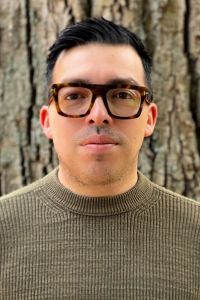
Assistant Professor of Acting and Directing, Department of Theater
Alvarez is an interdisciplinary theater director and visual artist whose work spans the U.S., UK, and Eastern Europe, with productions and performance installations at Her Majesty’s Theatre, the Institute of Contemporary Arts, the National Theatre of Slovenia, New York Theatre Workshop, and the British Museum. His research treats directing as a scenographic form of authorship, using space, image, and atmosphere to surface the mythic and political forces beneath dramatic narrative. He was previously professor of interdisciplinary performance and directing at the University of North Carolina School of the Arts. He holds a BA from the Royal Central School of Speech and Drama in London and an MFA in directing from the California Institute of the Arts.

Assistant Professor of Roman Archaeology, Department of Classics
Brock is a Roman archaeologist who studies the environment of the ancient city, using geoarchaeological coring to pull 15-meter-deep samples of the sediment along Rome’s central riverbank. That work has produced a series of discoveries about the landscape before Rome was a city, and about how it changed as the city grew, including the rapid sedimentation and escalating floods that struck Rome in the sixth century BCE. She’s interested in how past perspectives on human-environment relationships can inform modern sustainability challenges. Originally from Cincinnati, she earned her PhD in classical archaeology from the University of Michigan and spent eight years at the University of St. Andrews in Scotland.
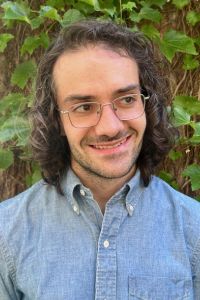
Assistant Professor, Program in Cognitive Science
How do people solve big problems with small brains? Callaway’s research answers that question through the lens of adaptive computation: people use cognitive strategies suited to both their external environments and their internal computational limits. He characterizes those strategies using tools from AI theory, such as reinforcement learning and metareasoning, alongside process-tracing experiments like eye- and mouse-tracking. He also studies how and why cognitive strategies go awry, including in mental illness, and what can be done to help people think in more productive ways. He earned his PhD from Princeton University.
Helena Cantwell

Assistant Professor, Department of Biological Sciences (arriving in January)
Cantwell is a cell biologist interested in how cells control their size and shape, and how those processes drive the very first cell divisions of animal development. She pairs microscopy of developing embryos with biochemical experiments in cell-free cytoplasmic extracts to work out the molecular mechanisms at play, what triggers them at the right moment in development, and how they contribute to whether an embryo survives. She earned her MBiochem from the University of Oxford and her PhD from University College London and the Francis Crick Institute, and comes to Dartmouth from a postdoc in the Heald Lab at the University of California, Berkeley.

Assistant Professor, Department of Psychological and Brain Sciences
Cooney studies the psychology of conversation. It’s the centerpiece of human social life, yet we know surprisingly little about how it works. His lab combines psychology, linguistics, and machine learning to study conversation at every level, from the micro-mechanics of turn-taking to how people synchronize across face, body, voice, and words. He wants to know what makes some conversations good and others fall flat, and how conversational dynamics might matter in areas that depend on them, from political polarization to the functioning of teams to assistive communication technologies. He holds a BA from Boston University and a PhD from Harvard University.
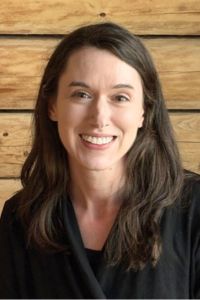
Associate Professor, Program in Cognitive Science and Department of Computer Science
Cooper studies how we see. She combines behavioral experiments with computational modeling to ask how the human visual system makes sense of the world, then applies those insights to emerging technologies and the problems they raise. Her lab is part of the Program in Cognitive Science and the Department of Computer Science, and works with researchers at every stage, from undergraduates to postdocs. She holds a BA in English language and literature and psychology from the University of Chicago and a PhD in neuroscience from the University of California, Berkeley.

Assistant Professor, Department of Government
Dixit is a political economist focused on South Asia. Much of his current work asks why ethnic divisions persist in developing countries and what governments can do to reduce them. His research on how welfare programs reduce inter-caste divisions in India, published in the American Political Science Review, won the 2026 Michael Wallerstein Award for the best article in political economy. He also studies the consequences of a caste-targeted wealth transfer program in India and has run collaborative field experiments in Bangladesh, Indonesia, and Tanzania that helped communities hold their education and health providers accountable. He earned his PhD from Harvard University and was a postdoctoral fellow at Princeton University.

Donald Knuth Professor of Computation and Just Communities, Department of Computer Science
Farid’s research covers digital forensics, misinformation, image analysis, and human perception. He first joined the Dartmouth faculty in 1999 and stayed until 2019, then spent seven years at the University of California, Berkeley, before returning in 2026. He is also co-founder and chief science officer at GetReal Security. He earned his undergraduate degree from the University of Rochester and his PhD from the University of Pennsylvania, followed by a postdoctoral fellowship in brain and cognitive sciences at MIT. He has received an Alfred P. Sloan Fellowship and a John Simon Guggenheim Fellowship and is a Fellow of the National Academy of Inventors.

Associate Professor of Black Studies, Department of English and Creative Writing
Morris Johnson studies 20th- and 21st-century African American and Caribbean writing, performance, and archives. She is the author of The Souths in Her: Black Women Writers and Choreographers and the Poetics of Transmutation and co-editor of The Cambridge History of Black American Women’s Literature, in progress with Cambridge University Press. A second monograph, on Black women’s experimental archival methods, is underway. She comes to Dartmouth from the University at Buffalo, where she was an assistant professor of English and directed the MA program in English.

Assistant Professor, Department of Computer Science
Shan works on security, privacy, and trustworthy AI, in particular how generative AI systems use data: training-data attribution, model memorization, provenance identification, and auditing of generative outputs. He created Glaze and Nightshade, two widely used tools that help artists protect their work from unauthorized use in AI training, and his work has been covered by the New York Times, the Wall Street Journal, and TIME. He earned his PhD from the University of Chicago. He has been named Innovator of the Year by MIT Technology Review and has won the USENIX Internet Defense Prize.
Ellen Sletten

Professor, Department of Chemistry
Sletten is a chemical biologist working at the interface of chemistry, materials, and medicine to develop new probes and technologies for diagnostics and therapeutics. Her group is a world leader in imaging living tissue with shortwave infrared light, a capability she aims to bring to the clinic in collaboration with biomedical optics colleagues at Dartmouth Engineering, the Geisel School of Medicine, and Dartmouth Hitchcock Medical Center. She earned her PhD at the University of California, Berkeley, with Nobel laureate Carolyn Bertozzi, and her doctoral work was featured in the prize. After postdoctoral studies at MIT, she joined the UCLA faculty in 2015 and was promoted to professor in 2023.

Associate Professor, Department of Theater
Woodward is a scenic and costume designer for theater, ballet, and opera, with a practice centered on new work. His credits include the world and Broadway premieres of The Sound Inside, starring Mary-Louise Parker, and the world premiere of the ballet Their Eyes Were Watching God. He joins Dartmouth from the University of Connecticut and the David Geffen School of Drama at Yale, where he taught undergraduate and graduate students. He holds an MFA from Yale and a BFA from Ithaca College, and is a member of United Scenic Artists and the Colt Coeur theater company. He has also served on the executive board of Wingspace, a nonprofit that supports dialogue and advocacy around design.

Assistant Professor, Department of Linguistics
Wray is a psycholinguist who studies how language is stored and processed in the mind and brain. Her research focuses on word recognition models, which describe how someone distinguishes the words of their language from other possible words. She works to improve those models by drawing on languages that are understudied in psycholinguistics, such as Arabic and Tagalog, to fill gaps left by English-dominant research. She moves into this role from a previous position at Dartmouth as a lecturer in linguistics, cognitive science, and psychological and brain sciences. She was a postdoctoral associate at the Neuroscience of Language Lab at NYU Abu Dhabi and earned her PhD in linguistics from the University of Arizona.